No containers in your request yet.

Open top of hard top container: which one do you choose for cargo that goes from the top?
Open top or hard top container: which one do you choose for cargo loaded from above?
You usually look for an open-top container because something doesn’t fit through the doors: a machine on a frame, a transformer, a stack of long profiles that can only be placed with a crane. Then you encounter two versions that solve the same problem and yet work very differently: the open-top with a tarpaulin roof and the hard top with a removable steel roof. Below is an explanation of the difference in practice, and when which version is the right choice.
What an open top container is
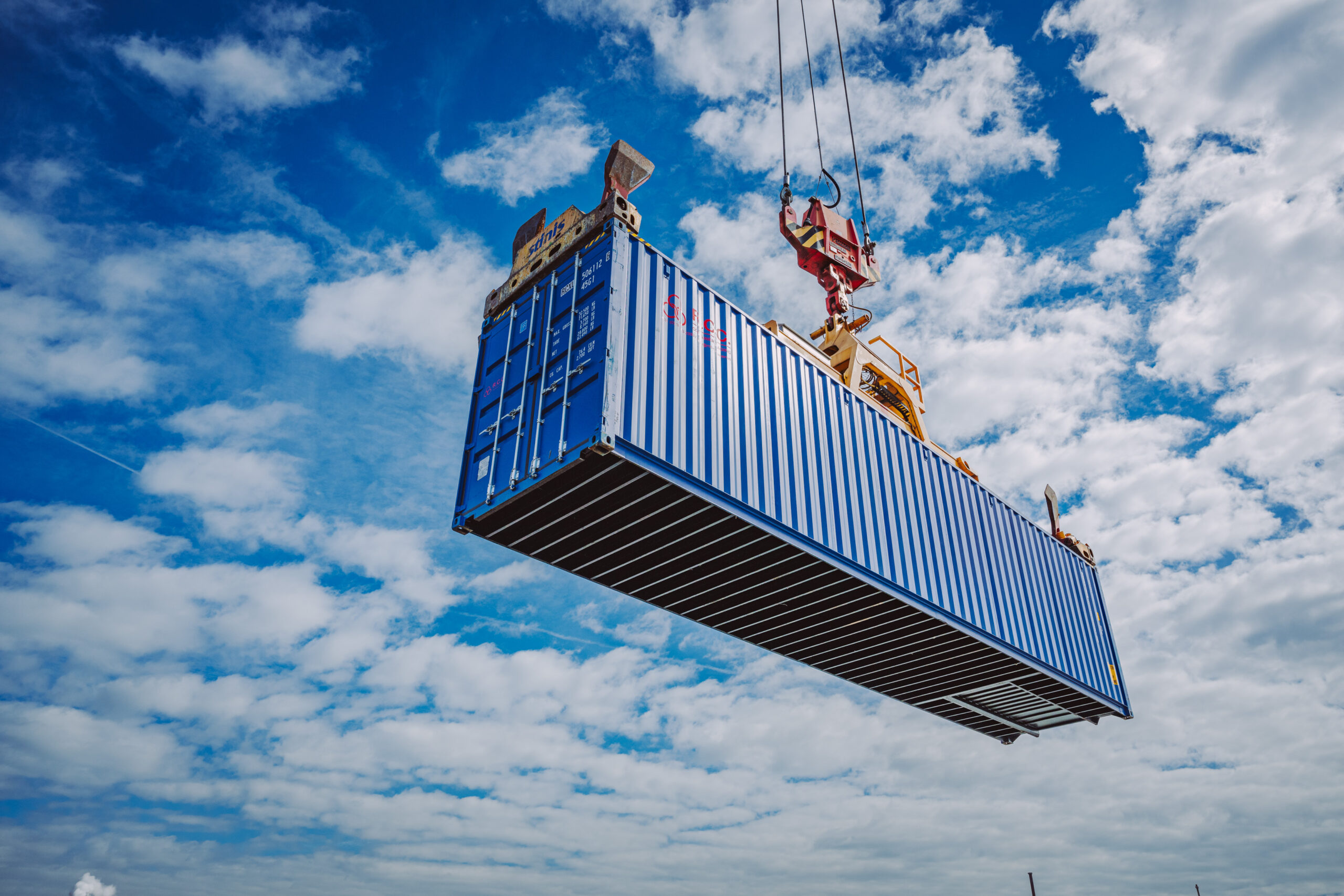
An open-top container has no fixed roof. Instead, loose roof beams are placed across the width, with a covering tarp stretched over them. Remove the beams and the tarp, and the entire top is free. A crane then lifts the load directly from above onto the floor, without you having to tilt or slide anything.
The 20ft open top and the 40ft open top In many versions, they also have a removable top lid above the doors, the header. This allows you to slide long loads horizontally inside, which would otherwise hit against the top beam. For profiles, pipes and long boxes, this is often the decisive argument for the 40ft variant.
What makes a hard top container different
A hard top container serves the same purpose, but instead of a tarpaulin it has a removable steel roof. The crane lifts that roof off in one go, the cargo goes in, and the roof goes back on. With the roof on, the container is completely watertight and weatherproof, just like a closed container. On request there is also a version with a hinged roof, so you don’t need a second lifting movement.
The hard top therefore combines loading from above with the protection of a sealed box. That is also the reason why it is scarce on the second-hand market: those who have one usually keep it. RCC supplies the 20ft hard top and the 40ft high cube hard top new and used, but the used stock changes quickly.
The difference in practice
On paper it seems minor: tarpaulin or steel. In day-to-day operations, these are the points where it makes a difference.
- Weather resistance. A well-lashed tarpaulin keeps out the rain, but is never as tight as a steel roof. If the container stands outside for weeks with moisture-sensitive cargo, the hard top wins.
- Loading height. With an open top, the cargo may protrude above the top edge, as long as you leave the tarpaulin off and the transport is arranged for it. With a hard top that is not possible: the roof has to fit on.
- Handling on-site. Two people can remove the tarpaulin of an open top. For a steel roof you need the crane you are already using for the cargo, so in practice it is not an extra cost, but it is an extra lifting movement.
- Security. A tarpaulin can be cut open. A steel roof cannot. For valuable cargo that stays on the road or on a site, that counts.
- Wear and tear. Sails and rigging are wear parts that need to be replaced periodically. A steel roof lasts as long as the rest of the container.
When do you choose the open top?
The open top is the standard choice when the cargo only goes in and out of the container once and the transport is short: project cargo to a construction site, a machine to a factory, a one-time sea shipment. Also, if the cargo is heavier than the container, the open top is the only option. And it is more widely available in used condition, which lowers the purchase price. For most project shipments, this is the container you need.
When do you choose the hard top?
The hard top becomes interesting as soon as the container is used more often or stands outside for longer. Think of a workshop that regularly receives heavy parts, storage on an outdoor site where loading is done by crane, or recurring transport of machines that have to stay dry. Every time you lash or replace a new tarpaulin on an open top is an argument for steel. Anyone who uses the container for years earns back the higher purchase price in maintenance and damage-free cargo.
New or used, buy or rent
Both versions are new and used. For an open top that lasts one project, a used container in good condition often suffices. For a hard top that will last for years, new is usually the better option. The exact conditions are stated in our article about new, used A and used B.
If it is a one-time project, then rent often cheaper than buying. If the container is structurally integrated into the operation, then buy You can have it. If you have any doubts about the size or the version with a hinged roof, we will take a look at the load and the loading process. The full overview can be found on the page. open top containers.
Frequently asked questions
What is the difference between an open top and a hard top container?
An open top has a removable tarpaulin over loose roof bows; a hard top has a removable steel roof. Both are loaded from above with a crane. With the roof on, the hard top is completely watertight and better secured; the open top is easier to use and allows cargo that protrudes above the edge.
Can the cargo protrude above the edge of an open top container?
Yes, if the tarpaulin is left off and the transport is arranged accordingly. With a hard top that is not possible, because the steel roof has to fit.
In what sizes are open top and hard top containers available?
RCC supplies open top containers 20ft, 40ft and 40ft high cube. Hard top containers in 20ft and 40ft high cube, new or used. Used hard tops are scarce, so ask about the current stock.
Is a hard top container with a hinged roof available?
Yes, upon request. Then the roof does not need to be removed separately.