No containers in your request yet.
Buying a sea container: what new, used A and used B really mean
Buying a sea container: what new, used A and used B really mean
Buying a sea container means for most first-time buyers first solving this problem: one site lists a 20ft container for 1,900 euros, another for 750, and it’s nowhere clear where that difference comes from. Moreover, the photos seem suspiciously similar.
That difference lies in the condition, and that is less subjective than it seems. Below we explain what the common conditions mean, what you should look at specifically, and when the cheapest container becomes the most expensive decision.
New is almost never really new.
A container that is offered as new is usually a one-trip container. It was built in Asia, has been loaded to Europe once and is sold here. Technically, therefore, it is second-hand; in practice, it is practically unused: tight sheet metal work, cool coating, door handles that still close as they should.
You pay a hefty premium for that compared to used products. It’s worth it if the container is visible to customers or the public, if it’s painted or decorated, or if it’s being converted into a building. It’s just better to paint it on solid steel.
Used A and used B: where the difference lies
At Used containers A distinction is usually made between two qualities. That classification is not legally established, which means that you need to check with each seller to find out exactly what is meant by it.
For us, used A means: wind and water resistant, doors that open and close smoothly, a floor without cracked or damaged parts, and superficial rust but no through-corrosion. Cosmetic-wise, you see dents and discoloration, and almost always still traces of the previous paint color.
Used B is still functionally usable for storage, but with heavier cosmetic damage and sometimes repairs in the floor or side walls. For a storage container in a fenced-off area that’s fine. For something that’s visible or being remodeled, usually not.
What to check yourself during a viewing
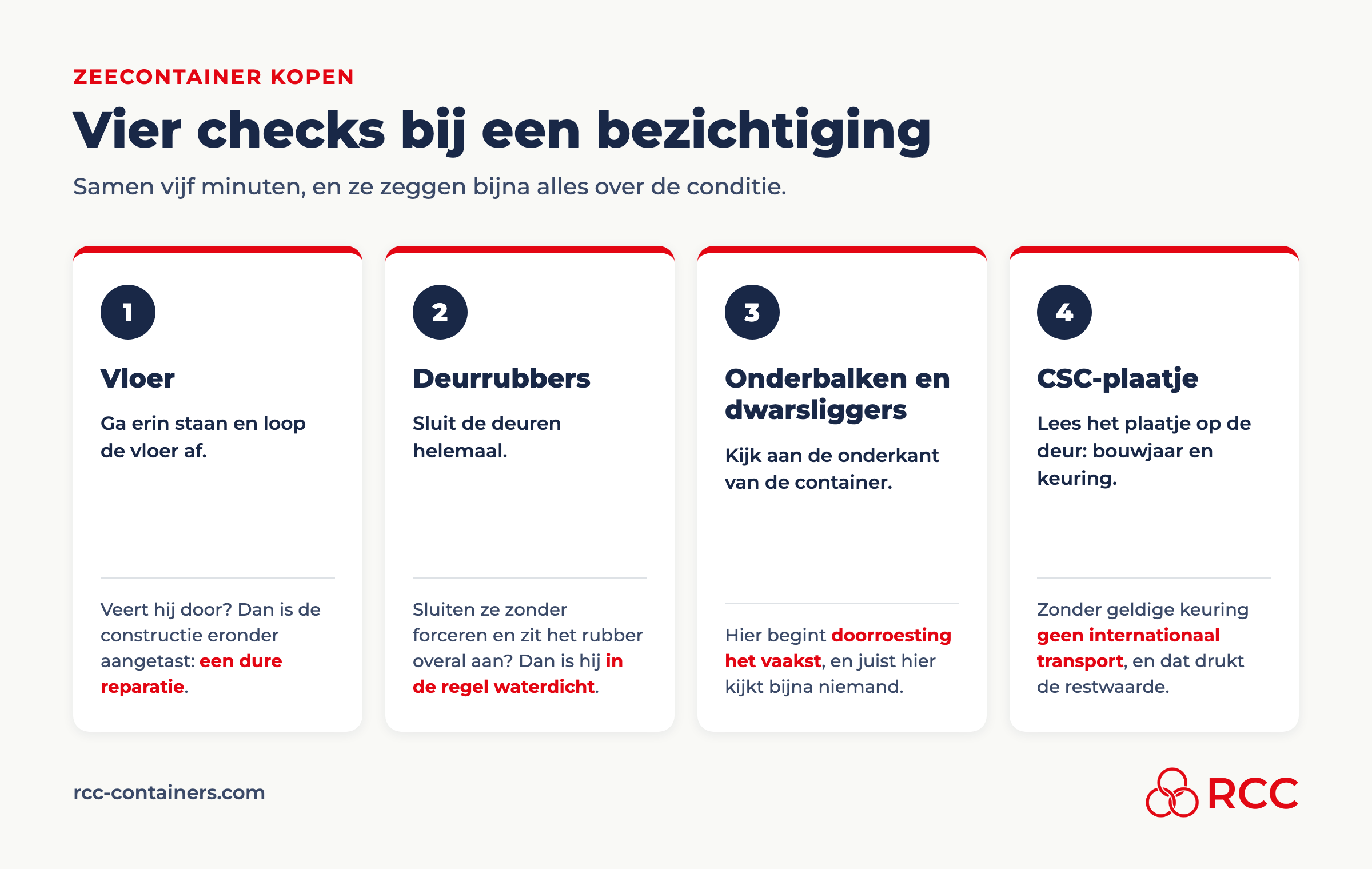
Four things say almost everything, and they cost you a total of five minutes.
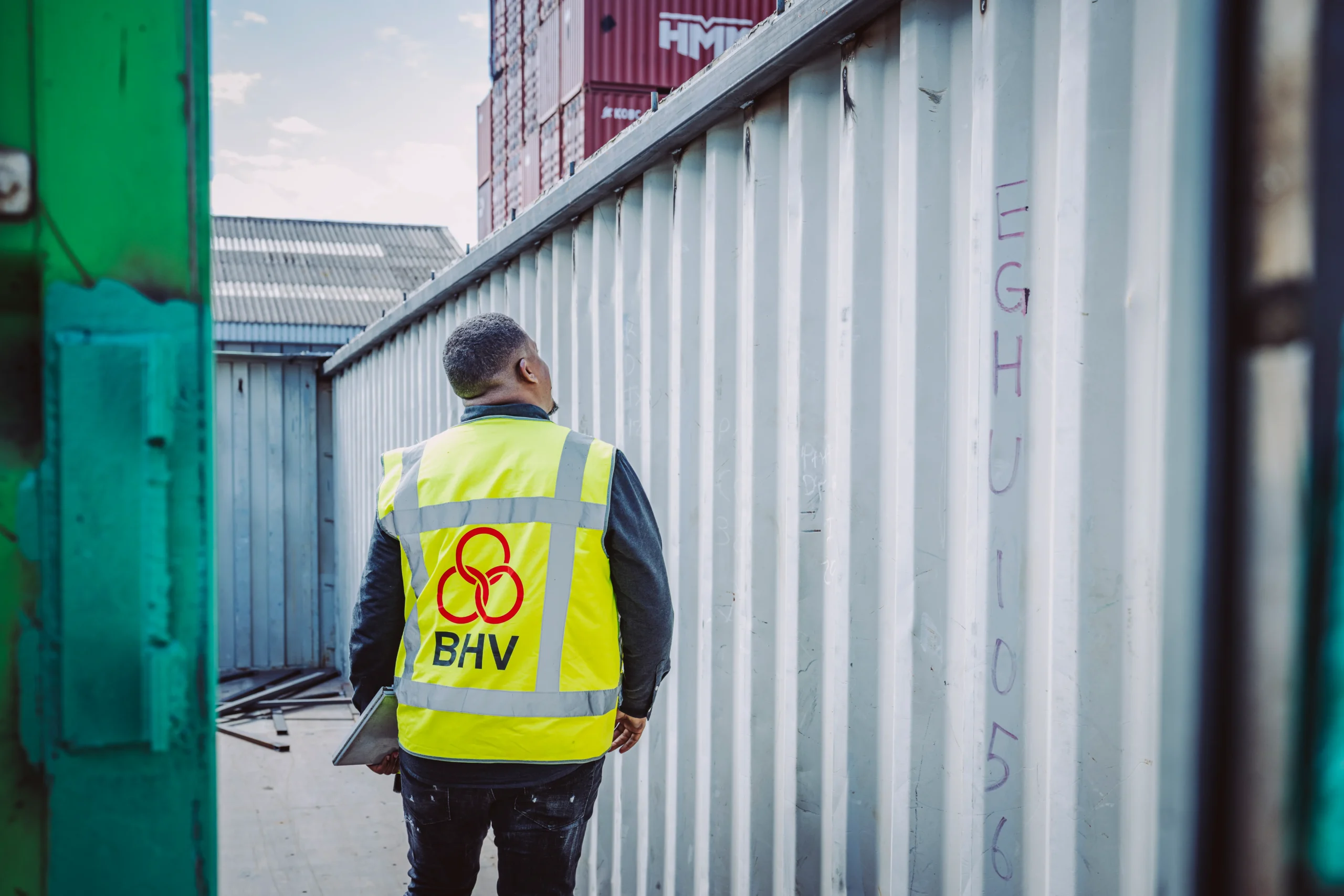
Start with the floor. Get in there and take him down. If he gets through it, the underlying structure is compromised and that's an expensive repair. Then look at the door handles and close the doors completely. If they close without forcing and the rubber is all over the place, then the container is usually waterproof.
Then look at the the bottom bars and the crossbars at the bottom. That's where the most often happens to be rotted, and that's where almost no one looks. Close with this CSC sticker on the door. It states when the container was built and until when it has been approved. Without a valid inspection certificate, it is no longer allowed to be used. transported internationally are being sold, and that significantly limits the residual value.
Which size suits which use
| Use | Recommended condition | Why |
|---|---|---|
| Storage on your own premises | Used B | Appearance doesn't matter; wind and water proof is sufficient |
| Storage in view | Used A | Representative without the added cost of new |
| Renovation or modification | new or used A | sturdy steel lasts longer and cures better, less pre-processing required |
| International transport | New or used A with a valid CSC | no international transport without a valid inspection |
| Renting to third parties | new | Least maintenance and complaints over the duration |
| Short-term use, a few months | rent instead of buying | renting is usually cheaper under a year |
That last rule is often forgotten. If you need a container for less than about a year, rent usually the cheaper route, especially if you add up the disposal costs and the residual value.
Buying a shipping container at the lowest price: when does that become expensive?
The classic mistake is buying a used B and then turning it into an office, workshop or storage unit. The purchase may save you eight hundred euros, but the restoration work beforehand, the painting and the extra paintwork make up for that difference quite easily. And you run the risk that more will come to light during the renovation.
Second mistake: buying based on photos. Many vendors use photos that do not show the container you receive. That’s not necessarily a bad thing, because the inventory changes daily, but it does mean that you have to ask for photos of the actual unit or come in person.
We operate from our own terminal in Rotterdam-Botlek, where the stock is physically located. You can come and choose. For those who cannot, we take pictures of the specific container before anything is delivered.
One more thing about the inspection
One CSC inspection It is mandatory for international transport and must be repeated periodically. If the container is only being stored, then a lapsed inspection is not a problem for use, but for the residual value. If you are considering selling the container in a few years, it is worth considering it.
Check the current stock in our store. Range, Or explain your situation. We’ll be honest: renting is more sensible in your case than buying.
Frequently asked questions
How much does a used shipping container cost? That depends on the size, condition and market price of steel, which moves quite a bit. A used 20ft is usually in a completely different price range than a one-trip 40ft high cube. Always ask for an up-to-date price. the size and the condition you are looking for, because price lists on the internet are often months old.
Is a one-trip container the same as a new container? Almost. A one-trip container has made one loaded trip and is otherwise unused. Cosmetic and technical differences from brand-new ones are negligible; the price is lower.
How do I know if a container is waterproof? Close the doors completely and stand inside with the doors closed. If you can see daylight through seams, corners, or the roof, it is leaking through there. Additionally, check that the door seals are properly attached everywhere.
Can I just place a shipping container on my property? Temporary placement on your own premises often does not require a permit, but municipalities apply different rules, especially when it comes to permanent placement or when a container is converted. Please inquire in advance. your municipality.
What is a CSC sticker and why is it important? The CSC label on the door shows the year of construction and the validity of the inspection. Without a valid inspection, a container may not be transported internationally, which limits its usability and residual value.